Car Paint Craquelé: Causes & Repair Guide

Cracks in your car’s paint or clear coat can be quite an eyesore. These small or larger cracks are also known as craquelé and don’t just appear randomly. In this blog article, we explain what craquelé in car paint is, how you can repair it, and how to prevent car paint from craquelé happening again. Useful if you’re painting yourself or simply want to learn more about this phenomenon!
What exactly is craquelé in car paint?
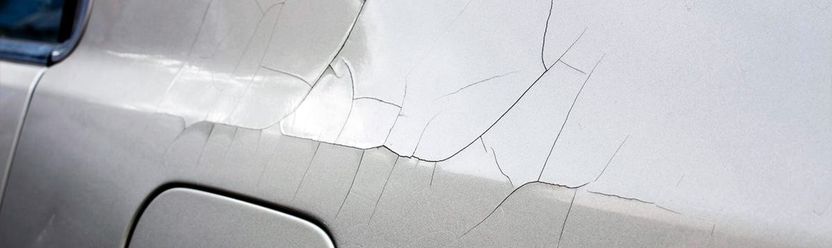
Craquelé, also called craqueluring, refers to the appearance of small cracks or fissures in the paint layer. In car paint, this happens when the different layers of paint do not adhere properly to each other or when they lose their flexibility due to conditions like temperature changes. You can recognize craquelé by a large number of fine to larger cracks on the surface. With a thin paint layer, the cracks often remain subtle, but with thicker layers, these cracks can be deeper and more noticeable.
A common cause is spraying a hard 2K paint over a soft 1K synthetic paint. Due to the tensions between these layers, visible cracks appear in the clear coat or topcoat. Additionally, large temperature fluctuations, an insufficiently dry surface, or applying paint layers too quickly one after another can contribute to the formation of craquelé.
How can you recognize craquelé early on?
Craquelé often develops gradually. Pay close attention to small, spiderweb-like cracks, especially on parts exposed to direct sunlight or extreme temperature changes, such as the roof, hood, or side panels. A dull gloss or a light craquelé pattern can also be an early sign. By intervening early, you prevent it from spreading into deeper cracks that are harder to repair.
What are the consequences of craquelé?
Craquelé is more than just a cosmetic issue. Cracks in the paint can expose the underlying paint layers or metal to moisture, dirt, and UV radiation. This accelerates the aging process and can lead to rust or oxidation. Moreover, craquelé significantly decreases your vehicle's value, especially for classic cars or professionally painted vehicles. Acting quickly is therefore not only wise cosmetically, but also technically necessary.
Prevent craquelé in car paint with these tips
Prevention is better than cure. That’s why we’re giving you some handy tips to prevent craquelé in car paint:
- Check the compatibility of the paint layers. Never spray a hard 2K paint over a soft 1K synthetic paint.
- Ensure the surface is completely dry and properly sanded before you start painting.
- Do not spray too quickly in succession. Allow each layer to cure and evaporate properly to avoid tension in the paint.
- Preferably work in a stable environment without extreme temperature fluctuations.
- Use quality products and always follow the manufacturer’s recommended drying times.
By following these steps, you’ll enjoy a sleek and professional end result for longer.
How to repair craquelé in car paint
- Repairing craquelé in car paint requires a proper approach. The only truly effective way to repair craquelé is by removing the entire paint layer, including both old and new paint. This is the only way to create a solid base for a new, durable finish.
- For this, you can use for example sandpaper or paint remover to fully remove the craquelé paint. Afterwards, it is essential to thoroughly degrease and sand the surface. This ensures that the new paint layer will adhere properly and greatly reduces the risk of new craquelé.
- While repainting, make sure that each layer has sufficient drying time. By not applying the paint layers too quickly one after another, you prevent solvents from building up, which is a common cause of cracks in the paint.
Craquelé on classic cars and oldtimers
On classic cars, craquelé is sometimes even desired, as it is often seen as part of the vehicle’s character. But even then, caution is advised. If the cracks become too deep, the bodywork can be affected. For restoration projects, it’s important to decide whether you want to preserve the character or opt for a complete repaint. In both cases, you can turn to CROP for the right approach and products.
Can craquelé happen again?
Yes, craquelé can reoccur if you don’t address the root cause. Even if you repair the top paint layer, the problem will quickly return if you don’t correctly remove or treat the underlying paint layers. That’s why it’s so important to always work from a stable base and with compatible products.
Need help with craquelé in car paint?
Are you experiencing issues with craquelé or unsure how to best start repairing the paint? Then contact our product specialists. As specialists, we at CROP know exactly which products you need and how to best repair craquelé in car paint. We’re also happy to assist you with personal advice and practical tips for a top result. Because in the end, paintwork deserves the best care!